Symposium NRTW 2026 – National Reliability Technology Workshop
Platform for Advanced Characterisation – Grenoble (PAC-G) supports #NRTW 2026 Symposium, organised by the Centre Français de Fiabilité.
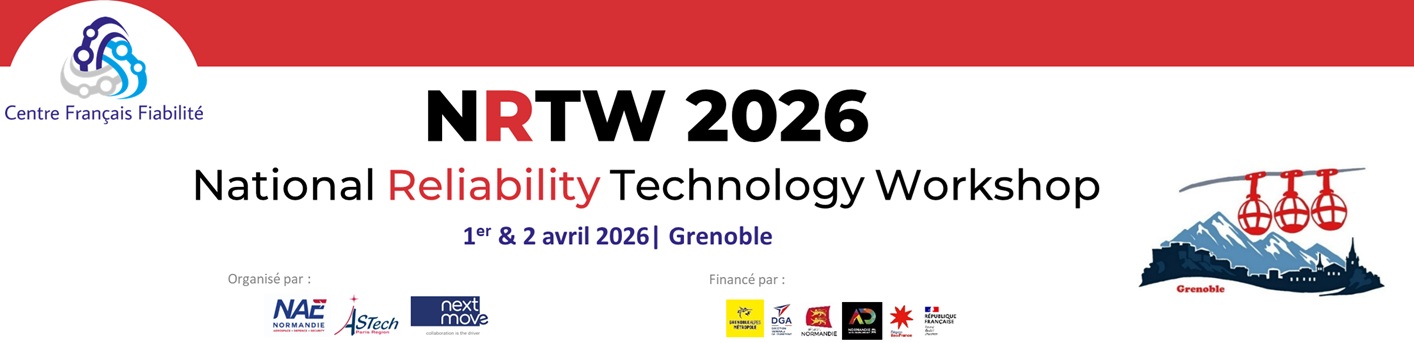
The 8th edition of the NRTW (National Reliability Technology Workshop) will take place in Grenoble on 1st and 2nd April 2026. The event is organised as a forum for exchange and networking among reliability professionals in the electronics and photonics sectors, offering a unique opportunity to strengthen synergies and enhance the European reach of the reliability community.
Theme:
“Electronic and photonic reliability: Evaluate, predict, master” with three guiding questions:
-
How can we evaluate and understand the impact of humidity on the reliability of electronic components or systems?
-
What role should predictive reliability play for electronic components (HUMS, PHM, Big Data, AI, …)?
-
What is the level of mastery of electronic reliability in emerging photonic technologies?
When & Where
📅 Wednesday 1 April 2026 – 9:00 to 17:00
📅 Thursday 2 April 2026 – 9:00 to 16:00
📍 Auditorium, Grenoble INP – UGA — 3 Parvis Louis Néel, 38000 Grenoble, France
Highlights & Format
-
Technical sessions with leading experts
-
Networking opportunities and industry pitches
-
Site visit and dinner event included in registration
-
Cocktail lunches during the symposium
The symposium is in-person only (no online/virtual attendance), with paid registration and special rates for CFF members.
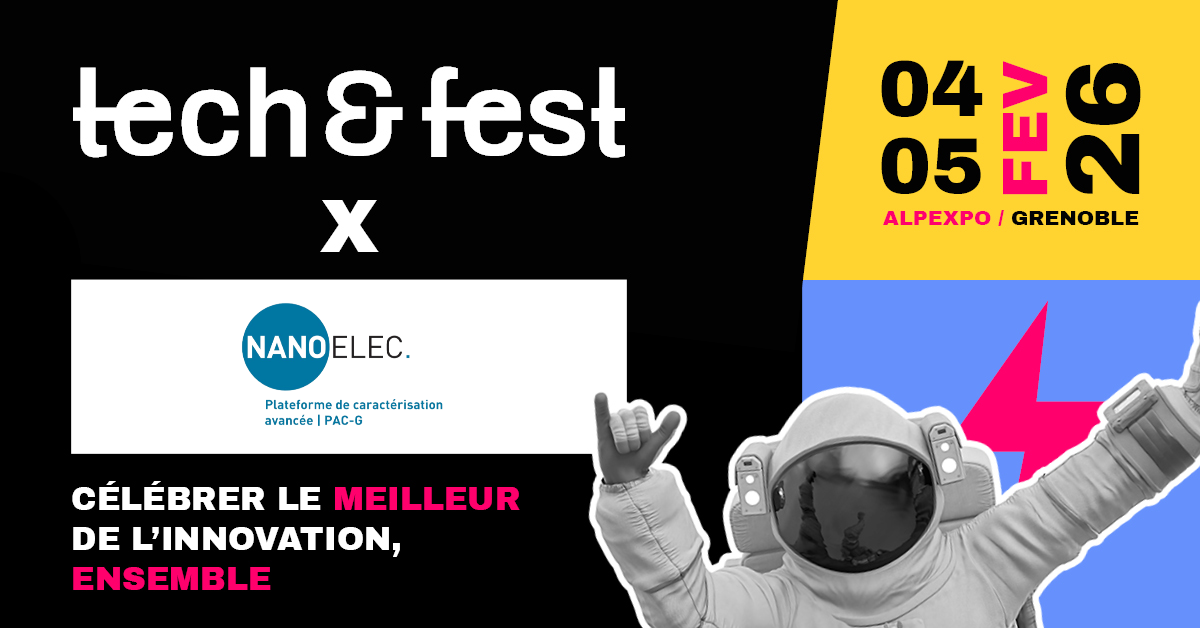
TECH&FEST 2026
Tech&Fest 2026, taking place on February 4–5, 2026, at Alpexpo in Grenoble.
This two-day festival celebrates the best of technological innovation, bringing together researchers, industry leaders, entrepreneurs, and students to explore emerging trends and cutting-edge developments.
Why attend:
Tech&Fest offers a unique opportunity to discover the latest innovations across industries, from energy and digital systems to sustainability and advanced manufacturing. Participants will gain insights into how new technologies are shaping the future economy, fostering collaboration between research and industrial communities.
Program highlights include:
- Keynote conferences from leading experts in technology and innovation.
- Themed exhibition zones and interactive workshops.
- Networking sessions, job-dating opportunities, and guided tours of tech showcases.
- Hands-on experiences highlighting breakthroughs in digital, energy, and industrial technologies.
Who should attend:
Innovators, researchers, engineers, entrepreneurs, students, and anyone passionate about technology, industrial solutions, and research-driven innovation.
Enjoy the vibrant city of Grenoble, nestled at the foot of the French Alps, combining two days of inspiring technology showcases with stunning landscapes and rich local culture.
Venue: Alpexpo, Grenoble, France
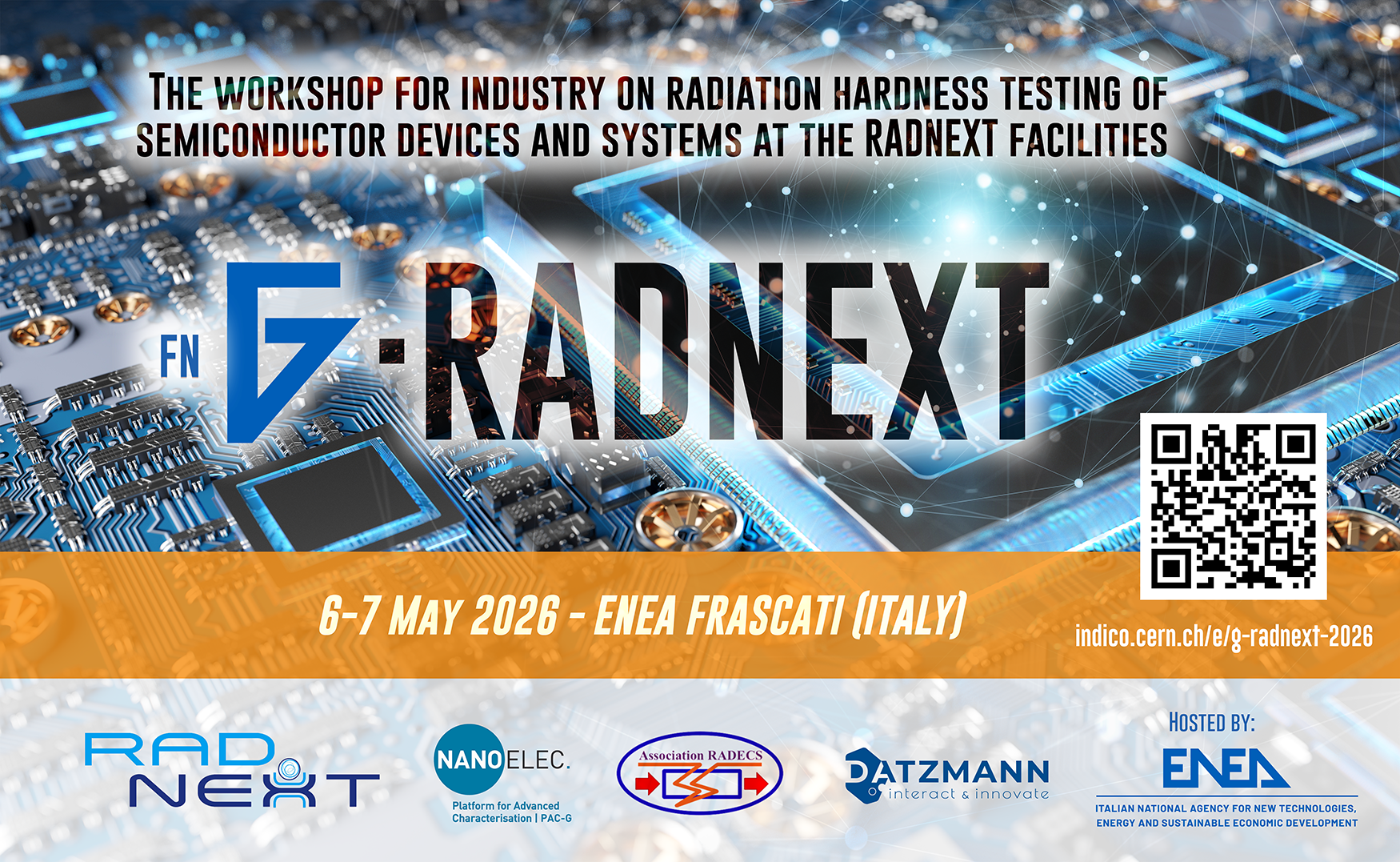
G-RADNEXT Workshop 2026
6–7 May 2026 at Villa Mondragone, Frascati, Italy
Workshop for Industry on Radiation Hardness Testing of Semiconductor Devices and Systems at the RADNEXT Facilities
Overview:
G-RADNEXT 2026 brings together industry, research infrastructures, and experts in radiation effects to address the growing challenges of radiation hardness assurance for modern semiconductor technologies. The workshop focuses on emerging industrial needs, new applications (e.g., automotive, space, medical), and limitations of traditional testing methods, offering a platform to exchange insights and identify future trends.
Why Attend:
- Explore radiation hardness testing challenges and solutions for advanced microelectronics.
- Connect industry stakeholders with facility experts and research partners.
- Share needs and perspectives to shape future testing methods and facility development.
Organizers: RADNEXT, PAC-G (IRT Nanoelec), RADECS Association, ENEA, Datzmann Interact & Innovate.
Registration: Free of charge; registrations are open.
Format: In-Person
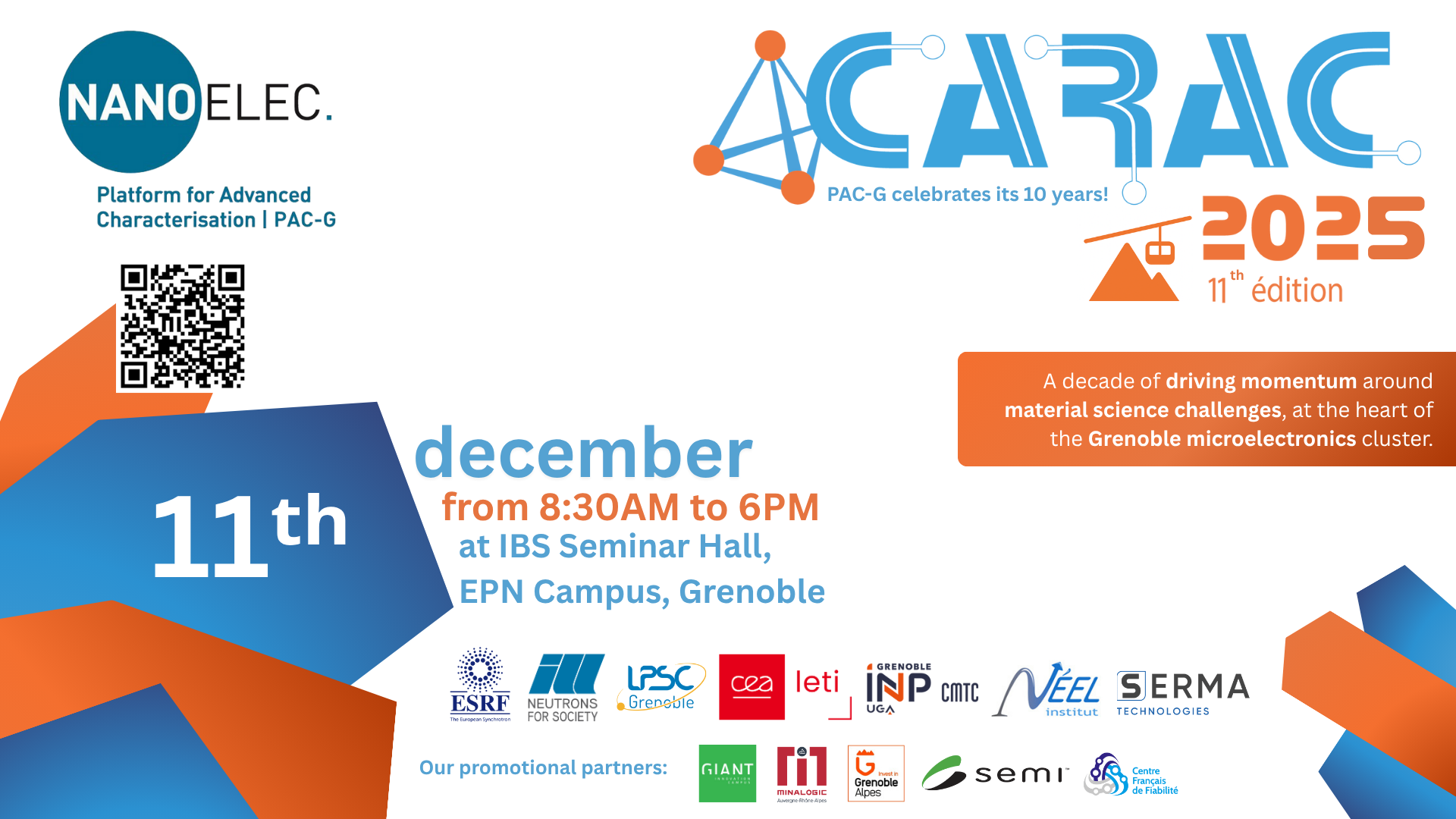
CARAC EVENT 2025
Registration is now open for CARAC 2025, taking place on December 11, 2025, at the EPN Campus in Grenoble.
Please note that, unlike earlier announcements, CARAC 2025 will now be a one-day event on December 11, offering a focused and high-impact program.
This edition marks 10 years of PAC-G, bringing together leading experts from industry and research to exchange on the latest advances in material characterization, metrology, and failure analysis for microelectronics.
Why attend:
CARAC offers a unique forum to explore how advanced X-ray and neutron techniques reveal structure, property correlations in semiconductor materials and devices. Participants will gain insights into how these methods support reliability studies, defect analysis, and process optimization, bridging research capabilities with industrial needs.
At the same time, you can enjoy the beautiful Grenoble area, nestled at the foot of the French Alps, combining a day of cutting-edge material science with stunning surroundings and vibrant local culture.
Program highlights include:
- A dynamic round table on « 10 years of characterization progress – its impact on industry and opportunities from the latest facility upgrades ».
- Technical sessions addressing microelectronics challenges in Quantum technologies, HPC chips, and Wide-bandgap semiconductors.
- Panels, exhibits, B2B networking, and facility tours.
Who should attend: R&D engineers, scientists, material science and reliability experts, and technology leads seeking to deepen their understanding of how advanced characterization drives performance, yield, and innovation in next-generation microelectronics.
Secure your place today by registering here:
👉 Register for CARAC 2025
You can stay updated by tuning in to our dedicated LinkedIn page: https://www.linkedin.com/showcase/platform-for-advanced-characterisation-grenoble-pac-grenoble/
Looking forward to your participation and to welcoming you in Grenoble this December.
Venue: IBS Seminar Hall, EPN Campus, Grenoble
For more details, please contact Inaam Ul Haq, Business Developer | PAC-G : inaam.ul-haq@esrf.fr
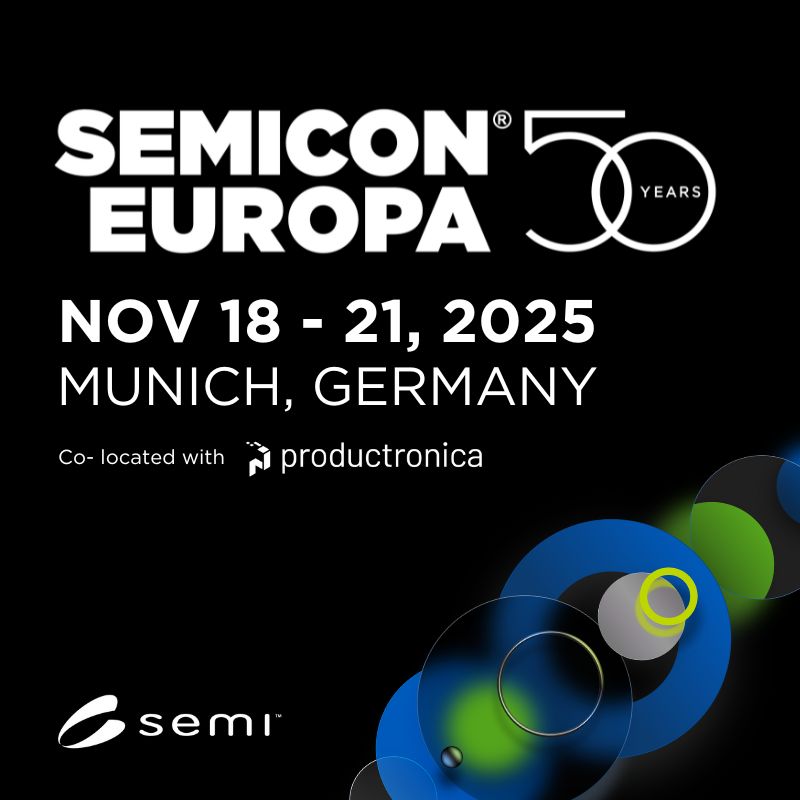
SEMICON Europa 2025 Open for Registration
Join us from November 18-21, 2025, in Munich, Germany, to celebrate the 50th Anniversary of SEMICON Europa, explore the theme Global Collaborations for European Economic Resilience, and support the European semiconductor ecosystem.
Register Now : https://www.semiconeuropa.org/about/register
Services
PAC-G provides a range of services, from consultancy work to executing sample characterisation experiments and analysing data. We provide access to large-scale facilities, such as synchrotron and neutron sources, and offer a cost-effective and rapid service tailored to the micro- and nano-electronics industry. Through us, industry can access cutting-edge characterisation tools without going through selection processes. We also offer access to some of the world’s most knowledgeable experts in the field of material characterisation.
Our services have applications in R&D, the various stages of product development, failure analysis and process optimisation. Some of the main areas that we specialise in are shown below. Please visit our dedicated applications and techniques page for more information.
What is PAC-G
PAC-G is a dedicated gateway giving the micro- and nano-electronics industry quick and easy access to some of the world’s most advanced characterisation facilities. We are unique, offering a single, unified access point to large-scale facilities such as synchrotron- and neutron-based sources. This gives us an extremely broad portfolio of individual characterisation techniques, complementary in nature, that we can offer our clients. PAC-G is part of the Technological Research Institute, Nanoelec (Programme d’Investissements d’Avenir, IRT Nanoelec under grant ANR-10-AIRT-05). Please visit the Nanoelec website for more information.
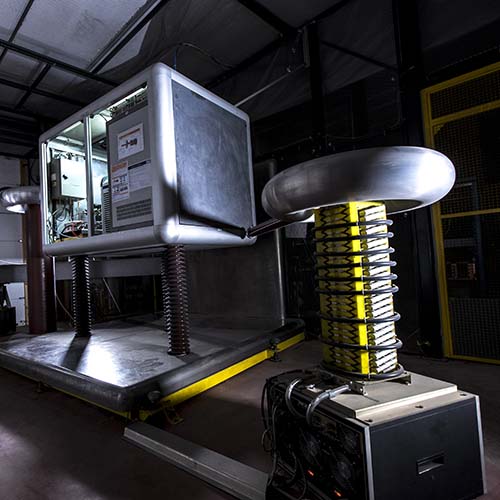
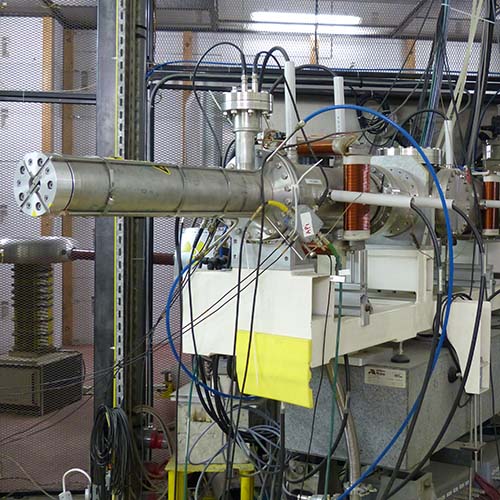
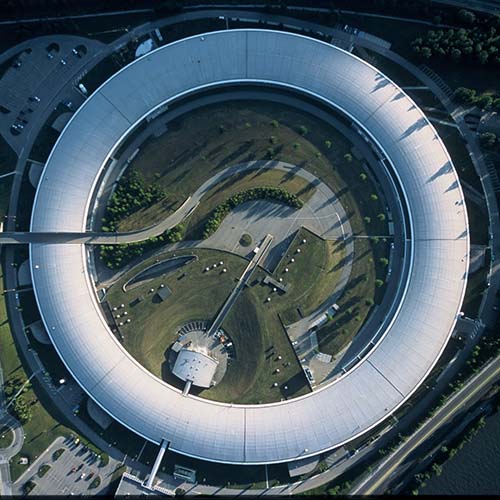
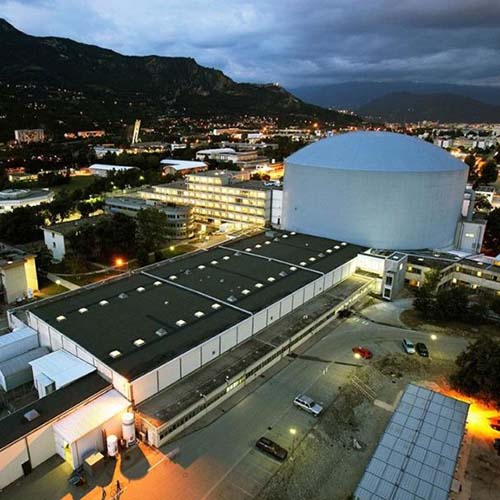
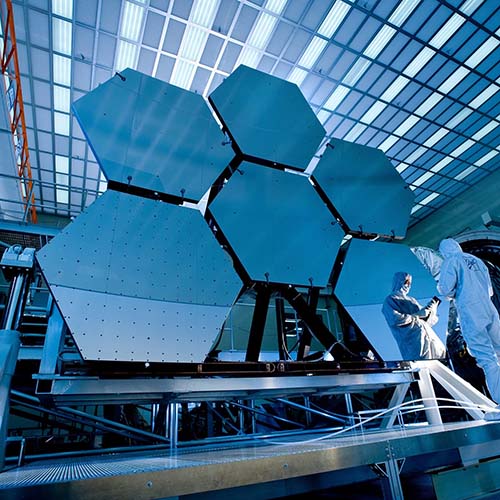
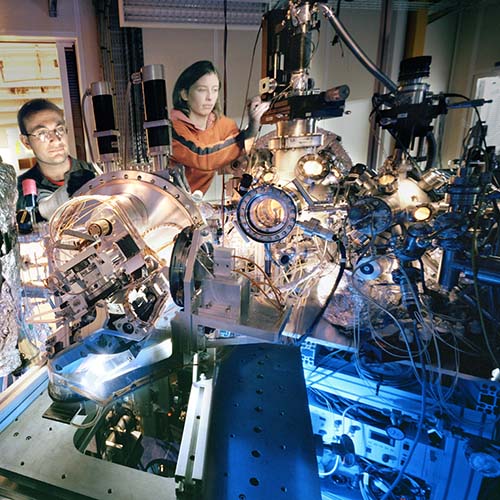
France, Grenoble, ESRF,
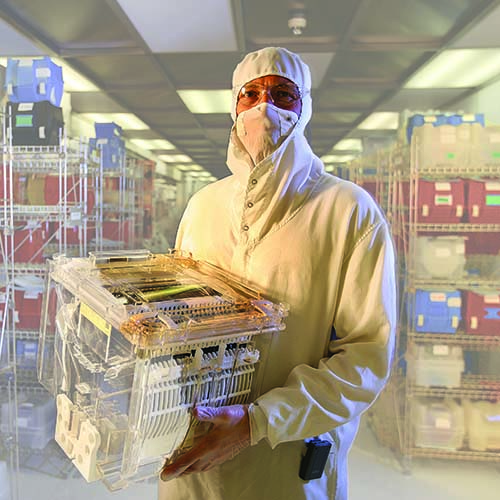
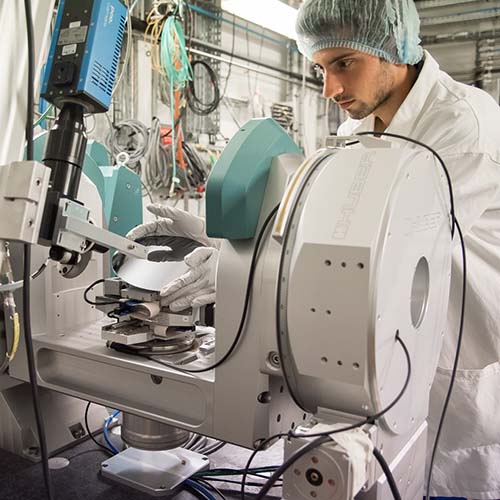
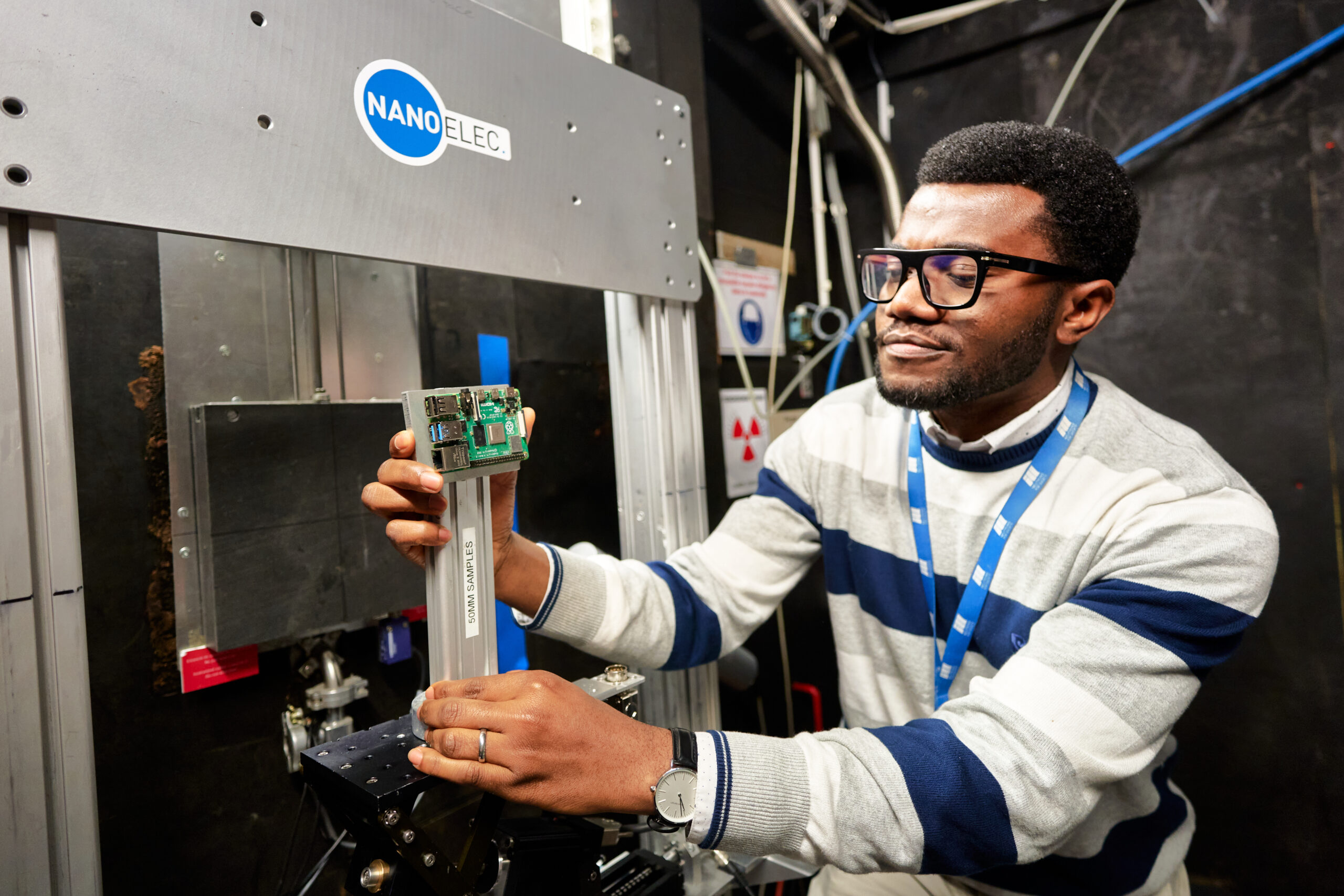
Luca CAPASSO, Technician on BM05 works on the diffractometer
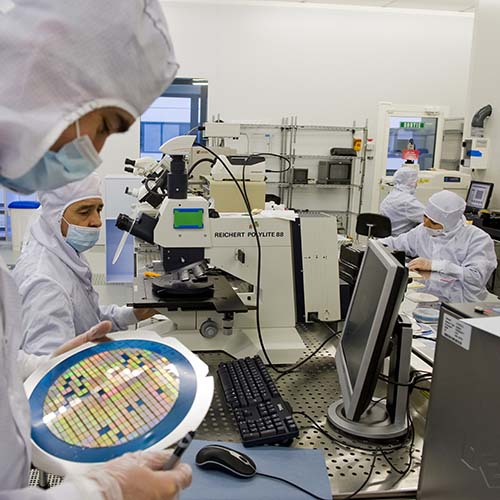
Composées de détecteurs nouvelle génération, ces caméras ultra sensibles permettent d’effectuer des observations scientifiques très performantes.
Who is PAC-G
PAC-G has four member characterisation institutes. These are the European Neutron Source (ILL), the European Synchrotron Radiation Facility (ESRF), the GENESIS neutron generator at the Laboratory of Subatomic Physics & Cosmology (LPSC-CNRS) and the Laboratoire d’Electronique et de Technologies de l’Information at the Commissariat à l’Energie Atomique (CEA-LETI).
In addition to the member institutes, PAC-G also has four industrial partners and one associated partner. These are STMicroelectronics, Soitec, Schneider Electric, IROC Technologies and SERMA Technologies, respectively. For more information about the four members institutes, partners and members of the PAC-G please expand the sections below.
PAC-G is formed by:
European Synchrotron Radiation Facility
Laboratory of Subatomic Physics & Cosmology (LPSC-CNRS
In addition, PAC-G is supported by four Industrial Partners:
Why PAC-G
The PAC-G member institutes offer a unique range of capabilities that cannot be matched anywhere else in the world. Furthermore, many of the techniques that they offer are complementary in nature.
Through PAC-G, our clients have access to a unique multidisciplinary team of knowledge experts. It’s also a more efficient and convenient way of working.
PAC-G offers mail-in services and can carry out proprietary work under NDA/CDA agreements. There are also opportunities for long term collaborations.
Our techniques give access to sample information that cannot be obtained using any other methods.
Many of our applications can be carried out as in situ studies to reveal how properties evolve.
TOur multidisciplinary team includes world-renowned experts who are leaders in their fields.
Virtual tour
EDiscover four European Synchrotron Radiation Facility (ESRF) beamlines, active in the domain of microelectronics, that industrials can access thanks to IRT Nanoelec Platform for Advanced Characterisation-Grenoble (PAC-G).
You can find here a link to the IRT Nanoelec’s neutron source TENIS, at the Institut Laue-Langevin: TENIS virtual tour.
You can also find a tour of the ESRF ID01 beamline here : ID01 virtual tour.
FAQ
Below we’ve listed some of the most common questions that we get asked. Please click on a question to see the answer. If you have other questions for us then please contact us
PAC-G stands for Platform for Advanced Characterisation Grenoble. It is a single entry-point for the advanced characterisation services provided by the European Synchrotron (ESRF), the European neutron source (ILL) and the Laboratory of Subatomic physics and cosmology (LPSC). The particularity of the PAC-G is to address the semiconductors market, specifically micro- and nano- electronics instead of having a broad range of sectors. The access is done in a fast and cost- competitive manner, with confidentiality levels adapted to your needs, which makes it particularly interesting for industrial research. Our scientists will set up the instruments beamlines and, depending on the service chosen, will perform the measurements and analyze the data.
No need for proposals, peer reviews or publications. We secure beamtime and also provide advice on the best technique (or combination of techniques) to use based on your characterization challenge.
The PAC-G was created within the frame of the French Technological Research Institute (IRT) Nanoelec, funded under the Investissements d’avenir economic stimulus package, (grant ANR-10-AIRT-05).
PAC-G aim is to open the large-scale facilities of Grenoble to the industry with characterisation services. If you are interested in other ways of collaborating with these research facilities (long-term collaborations, PhD proposals, public research etc.) we invite you to contact us and we will put you in contact with the right person inside these organisations.
PAC-G characterisation services are tailored for industrial R&D.
You can contact us at support@pac-grenoble.eu, or by phone +33 (0)4 57 42 80 77
One of our scientists will be in contact with you as soon as possible to understand your needs and characterisation challenges. In this process, technical meetings can be arranged. You will need to have good knowledge about your samples and the type of information you are trying to obtain; Typically at this stage confidentiality agreements are signed (NDA, CDA etc.)
Once we clearly understand what you are trying to do, we can advise you on the best techniques to use. If you already have that in mind, we can start assessing beam time and setups needed for your test. At this stage, price is evaluated and a quote is prepared.
If the quote is accepted, your test will be scheduled at the shortest possible delay, typically one month.
If requested, our scientists will perform the measurements. We encourage the participation of our clients, not only for the fun of science but also to answer some specific questions about the samples we might have during the experiment.
Depending on the service chosen, our scientists will perform the data analysis and deliver the results. We can also recommend other companies that can help you in this task.
If needed, we can also provide assistance in the interpretation of these results.
Yes, if you are already familiar with synchrotron X-rays or neutrons you can book only the beamtime and perform your experiments. You will have a local contact available to help you in case you need any assistance.
Yes. The main role of the PAC-G is to provide all the support needed in the use of large-scale facilities, from experts to new users. Starting from the expression of your need, we can structure a test plan and also guide you through our portfolio of techniques in order to find a suitable solution.
PAC-G techniques use synchrotron X-rays and neutrons to probe matter like giant microscopes, giving useful information from wafer-level characterization, device and system level characterization.
| PAC-G Technique | Information Derived |
|---|---|
| XRD (group of techniques) | Crystal structure, composition, crystalline grain size, phase recognition, lattice parameters |
| 3D Reciprocal Space mapping | Texture (crystallographic orientation of grains), microstructure, internal phases |
| Reflectometry (XRR, NR) | Thickness, roughness, electronic density, delaminations, interface characterisation |
| X-ray topography (XRT) (Group of techniques) | Crystal defects, dislocations, residual strain, stress, deformation |
| Small Angle Scattering (SAXS, SANS) | Defects (voids) size, size distribution, growth kinetics, Statistical characterisation |
| Critical dimension SAXS (CD-SAXS) | Morphology of line grating nano-objects (line width and height, picth size (period), line edge roughness, etc. |
| Tomography (Neutron and X-ray) | Morphology, defects, cracks, voids, precipitates, 3D visualisation, water/H contamination |
| X-ray fluorescence, Neutron Depth Profile | Contaminants, dopants concentration, chemical mapping |
| 14 MeV neutron irradiation | Single-event effects (SEE) sensitivity, random fault-injection, pre-qualification of electronic components |
| Low energy neutron irradiation (thermal) | Single-event effects (SEE) sensitivity |
| Pulsed, focused X-ray irradiation | Localised fault injection, Single-event effects (SEE) sensitivity |
Price is generally derived from beam time price rate of the facility the test is going to be using. Contact us for a quote.
Paid access is normally scheduled in the shortest possible delay, typically 1 month.
Synchrotron X-rays and neutrons have applications in a variety of R&D topics like process development and optimization, development of models and yield enhancement, failure analysis and reliability investigations, radiation hardness testing.
PAC-G is the result of a partnership between the ESRF, ILL and LPSC and as such, it is a part of those facilities. It works as an entry point, managing accounts and customer relationship. There are no margins or extra-costs associated with the use of the PAC-G, which is staffed by employees from ESRF and ILL.
The aim of PAC-G is to foster industrial use of large-scale research facilities for proprietary research through paid services, which are confidential by nature. If a client wants to publish all or part of his research involving the PAC-G, we will provide all the support he needs so he can do it. There are no obligations though.

